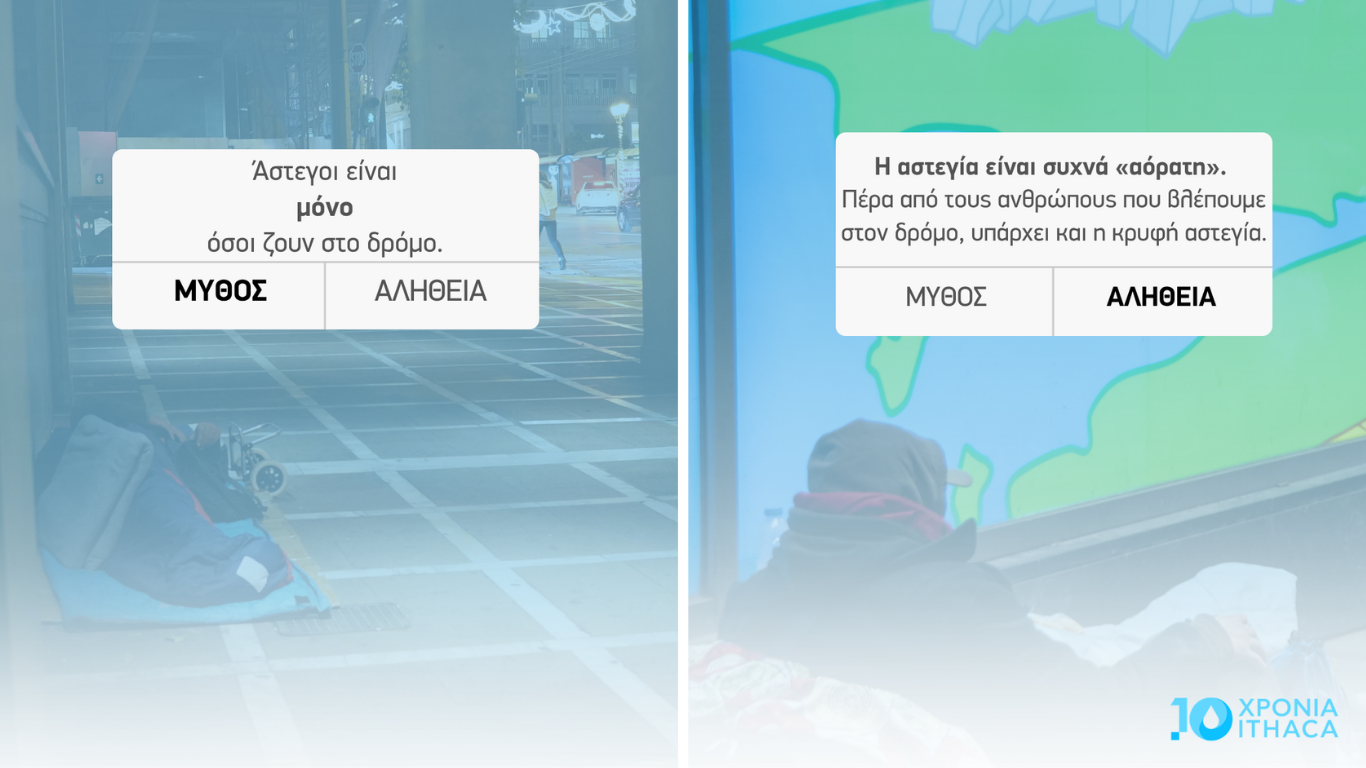
Myth vs. Reality: Are Only Those living on the Street Homeless?
 Christina
According to the ETHOS typology, homelessness includes much more than the extreme form of living on the street. It refers to people who lack a safe, stable, and dignified home, and the phenomenon is classified into 4 main categories, which include 13 different sub-units of living:
- Rooflessness: Includes people living on the street or in public spaces without any form of shelter, as well as those temporarily staying in night shelters and emergency accommodations.
- Houselessness: Refers to people who do not have a permanent residence and live in homeless shelters, transitional support hostels, women’s shelters for victims of domestic violence, and reception centers for migrants. It also includes individuals about to be released from prison or discharged from institutions (medical or child protection) without housing options secured.
- Precarious Living: People who live in conventional homes, but under threat of eviction or foreclosure, individuals facing a constant threat of violence in their environment, as well as those forced to temporarily stay with friends or relatives due to lack of resources.
- Inadequate Living: Individuals and families forced to live in non-conventional structures (such as cars, caravans, makeshift shelters), in buildings officially deemed unfit for habitation, or in conditions of extreme overcrowding.
Therefore, rooflessness is not always associated with the street. Most forms of homelessness remain “hidden” behind the walls of structures, precarious contracts, or inadequate spaces, highlighting the need for a holistic protection network.
The Invisible Barriers of Precarious Living
When forms of homelessness are not immediately visible, social exclusion intensifies. People experiencing homelessness in cars or under threat of eviction face serious daily problems that make their lives difficult:
- Lack of a stable reference point: The absence of a permanent address creates enormous bureaucratic and practical obstacles.
- Difficulty accessing personal hygiene: Self-care and clean clothes become a daily struggle.
- Stigma and prejudices: The fear of revealing their situation leads to isolation and avoidance of seeking help.
The problem, therefore, is not a lack of will for stability, but the lack of visibility and accessible support structures for all aspects of the phenomenon.
Ithaca’s Action: Visibility, Dignity, and Reintegration
At Ithaca, we resist stereotypes and work daily for an inclusive world, recognizing all forms of homelessness. For us, support is not limited to providing services.
Through our programs, we offer people often overlooked by society:
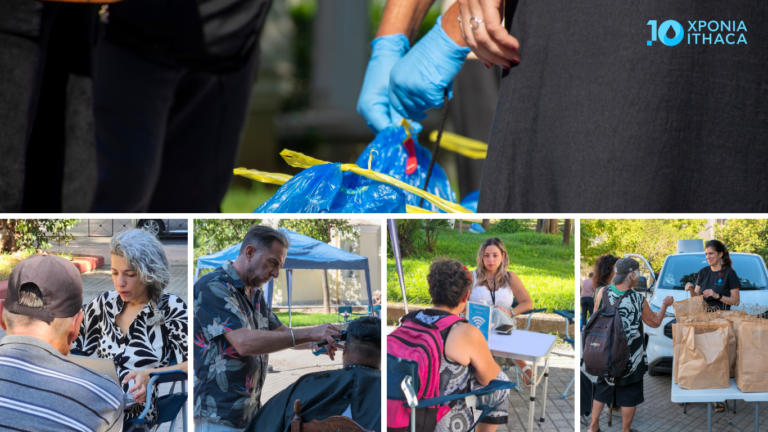
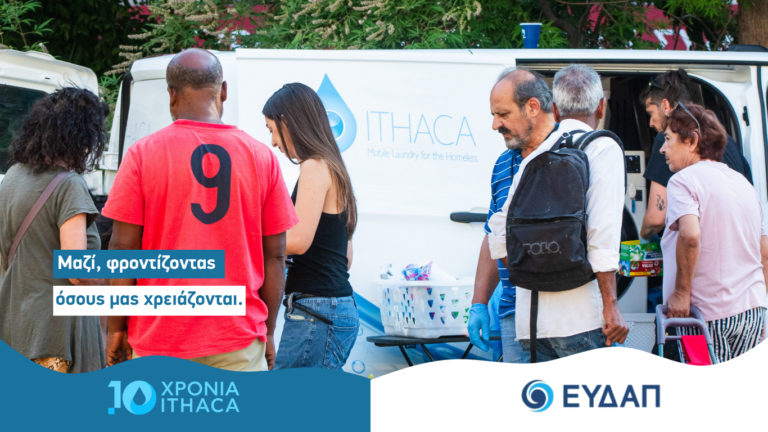
- Clean clothes and care: We restore a sense of dignity to their daily lives.
- Visibility: We give a voice to those experiencing the “hidden” forms of homelessness, bringing the issue to the forefront.
- Opportunities for reintegration: Through psychosocial support and employment counseling, we create the foundations for them to reclaim a secure life.
We believe that everyone deserves a second chance and a dignified home – not because they have to “prove” their worth, but because society has a duty to create equal conditions for all.
Learn everything about homelessness in Greece.